

Magic Circle 101: How to Use the Pilates Ring at Home
Updated: Sep 13
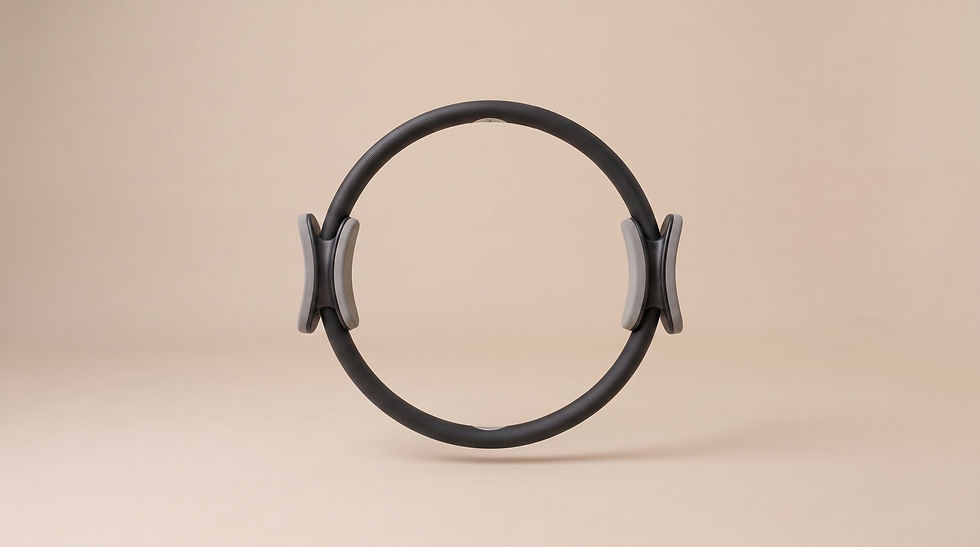
Most of us buy a piece of workout equipment with every intention of using it. Then it slips under the couch or to the back of a closet, and we forget it ever existed. If that's your Pilates magic circle, pull it back out. It takes up almost no room, adds gentle resistance, and gives your hands or legs something physical to connect with during a movement, which can be especially useful when you're practicing at home.
We'll keep this post simple: here's what the ring does, where to place it, how to choose one, and how not to overdo the squeeze.
What the Magic Circle Actually Is
A magic circle, also called a Pilates ring or fitness circle, is a flexible ring with padded grips on opposite sides. Depending on the exercise, you press it inward between your hands or legs, or outward against the inner pads. That light resistance gives you something physical to work against, while the ring's placement can make it easier to notice when your knees, feet, or hands start drifting. The goal isn't to crush it; instead a soft, steady press lets you keep breathing and stay focused on alignment.
Why Feedback Is the Underrated Benefit
When you practice alone, feedback matters because no one is beside you to point out a shoulder that has crept up or knees that are starting to turn in. A circle cannot grade your form, but it gives you physical feedback you can respond to, feedback like: you're losing engagement in the muscles you should be using, you're feet or knees are moving out of place, etc.

Practicing at Home? Get Our Free Form Guide
How to Use It: Lower Body
The circle is a useful add-on for lower-body work, especially when you want a little more feedback:
Between or outside of the thighs in bridges: use a light, steady press as you lift your hips. Keep your knees tracking comfortably in alignment with your hip sockets and your pelvis level.
Between or just above the outer ankles during leg work: use gentle pressure to give the legs a shared point of contact to cue inner or outer thigh engagement.
Outside the calves: this is great alternative placement the outer ankles, you can press outward against the ring to cue similar engagement in the outer leg muscles. This is a great addition for the hundred.
How to Use It: Upper Body and Core
The circle can be useful above the waist, too:
Between the palms in front of you: a gentle press in front of the chest adds shoulder engagement and gives you a steady point of contact while you focus on posture. Think between the palms during the roll up or pulling against the pads during spine twist.
Between the palms behind you: a gentle press can help engage the lats (the muscles under your armpits on you back, that track down your outer shoulder blades).
Below the sternum: having trouble with your pushup? Try placing it against your breastbone for a gentle upper body assist.
Want Your Form Right With Props? Grab the Free Form Guide
How to Choose One
The best first ring isn't automatically the firmest. Choose a version that lets you create a small, controlled bend without gripping too hard. Then consider the details that change how it feels in an actual workout:
Resistance: Start with a level you can control while still breathing normally, some are springier than others and you may ahve to try a few different brands to find the right resistance for you.
Pads: Rings with pads on the inside and outside give you more ways to position your hands, ankles, or thighs with comfort.
Size: Rings vary in size by manufacturer, so choose one that sits comfortably between your thighs or palms instead of shopping by a single standard size. Smaller rings are great for between-the-thighs work and maintaining alignment, for petite frames, or if you need a bit less resistance.
No matter the size, a magic circle is easy to store in a simple home setup.
Beginner Mistakes With the Pilates Magic Circle
The ring should support the exercise, not take it over. These are the mistakes that usually make it feel awkward or less useful:
Over-squeezing: A hard clench can pull tension into your shoulders, neck, or hips.
Holding your breath: If you stop breathing to maintain the squeeze, ease up.
Letting your position drift: Set up your alignment and core connection first, then add the ring.
Working through pain: Joint pain, neck strain, or sharp discomfort are signs to stop, choose a different setup, or get guidance.
As always, modifying the pressure to match your strength is the smart move, not maxing it out.
What Prompt Pilates Does Differently
A prop is only as useful as how it fits into your session. Prompt Pilates is a personalized at-home Pilates app that builds traditional Pilates workouts from modular exercises matched to your level and the equipment you own. If you have a magic circle, you can add it to your equipment list and we will incorporate it where appropriate to help you build to full expressions of exercises or advance ones you've already learned.
Ready to Train With What You Own?
A magic circle is a small, easy-to-store prop that can add light resistance and useful tactile feedback to home Pilates. Start with a gentle squeeze between the knees or palms, keep breathing, and notice how the movement feels. As your control improves, you can build it into more of your practice.
If you want a practice built around the gear you already own, join the Prompt Pilates waitlist for two free weeks of app access at launch.


Comments