

Pilates for Beginners: Everything You Need to Know
Updated: Sep 13

You've heard people rave about Pilates, maybe a friend swears it fixed her tech neck, or you've been inspired by a reel on social media. But when you actually try to get started, the options can be overwhelming. Reformer? Mat? Classical? Contemporary? It's a lot.
Here's the good news: Pilates is one of the most beginner-friendly workouts out there, and you don't need any equipment, or prior experience to start seeing real results. Let's break down what actually matters when you're just getting going.
What Even Is Pilates?
Pilates is a form of exercise that is all about working smarter, not harder - slow, deliberate movements done with enough control that your muscles actually have to think. The whole system builds outward from your center, which means your core does real work in every single exercise, even the ones that look like they're just about your legs or arms. It was developed in the early 20th century by Joseph Pilates, who originally called it "Contrology". People who went to his gym in NY in the early days said they were "going to Pilates'" as in Joe's gym, and it stuck.
And the method works; a 12-week study in the Journal of Strength and Conditioning Research found that doing mat Pilates twice a week significantly improved muscular endurance and flexibility (Kloubec, 2010). So if you're thinking of giving Pilates a try, let's talk a little about what you need to get started.
Do You Need Equipment to Start?
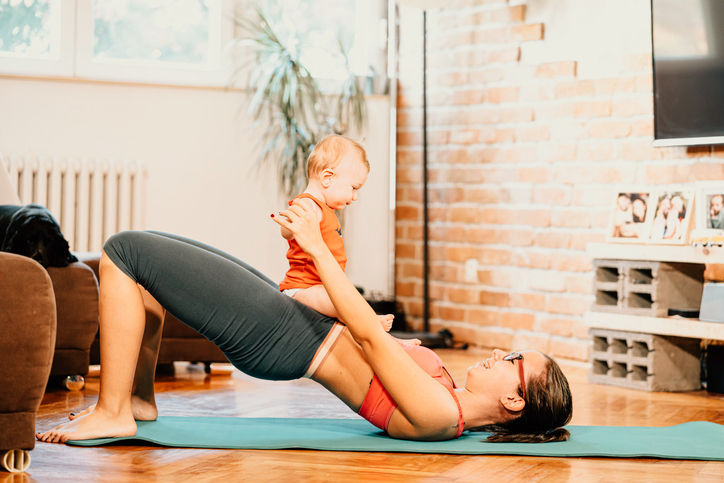
Nope. Mat Pilates uses just your body weight and a floor. That's it. A yoga mat is nice to have but not required, a carpet or rug works fine when you're starting out.
You might see people using reformers (those sliding bed machines), resistance bands, or Pilates rings. Those are all great tools, but they're not necessary for a good workout. In fact, most Pilates instructors recommend starting with mat work so you learn proper form and body awareness before adding the resistance that a reformer sometimes adds to key exercises.
Here is what you need:
Comfortable clothing: anything you can move in that isn't too baggy (so you can see your alignment).
A flat surface: open floor space with carpet, or a mat.
About 15 to 30 minutes: that's plenty for a solid beginner session.
If you're loving Pilates and interested in adding a bit more equipment to your routine, you can check out our at home set up article here.

Practicing Pilates at Home? Get Our Free Form Guide
What Does a Beginner Pilates Workout Look Like?
A typical beginner session focuses on learning to engage your deep core muscles, not by doing crunches, but through slow, intentional movements. You'll work on breathing patterns, pelvic stability, and exercises like:
The Hundred: a classic warm-up that gets your blood flowing and your abs firing.
Pelvic curls: a gentle tucking motion in the hip area that teaches you to move one vertebra at a time.
Leg circles: moving your legs individually in circles while maintaining hip stability and challenging your core to stay still.
Modified roll-ups: a slow, controlled sit-up that's much harder than it looks, but can be built up to over time.
Don't be surprised if it feels "easy" at first and then your muscles start shaking on rep three. Pilates exercise have a habit of sneaking up on you quickly if you have the proper alignment and form. The key is precision over speed. If you're flying through the moves, you're probably not doing them right.
Want to Get Your Form Right? Grab the Free Guide
How Often Should Beginners Practice?
Two to three times per week is the sweet spot for beginners. Joseph Pilates himself reportedly said, "In 10 sessions you'll feel the difference, in 20 you'll see the difference, and in 30 you'll have a whole new body."
Research backs this up. In that same Journal of Strength and Conditioning Research study, just two mat sessions a week for 12 weeks was enough to produce measurable gains in muscular endurance and flexibility (Kloubec, 2010).
We recommend starting with shorter sessions (15 to 20 minutes) and building up from there. Consistency matters more than duration. Three 20-minute sessions will do more for you than one 90-minute marathon where your form falls apart halfway through.
Getting Guidance Where You Need It
One of the best ways to make sure you're getting the most out of your Pilates workout is getting tailored guidance focused on form and a progressive tailored workout.
Most Pilates apps or workout channels throw you into a library of hundreds of videos and say "good luck." Prompt Pilates takes a different approach. The app builds a personalized program based on where you are right now: your fitness level, your goals, any movement limitations you're working around, and adjusts as you progress, providing form reminders as you move through your workout.
Your workouts are built for you, and they evolve as you get stronger. It's like having an instructor who not only remembers your name but also remembers exactly what you did last session. And because everything is mat-based, you can do it in your living room or wherever you've got a few feet of floor space. It's a great place to start, if you're new to Pilates!
If you're looking for a place to start (or restart), join our waitlist before we launch and get 2 weeks free!

References
Kloubec, J. A. (2010). Pilates for improvement of muscle endurance, flexibility, balance, and posture. Journal of Strength and Conditioning Research, 24(3), 661-667. https://doi.org/10.1519/JSC.0b013e3181c277a6


Comments